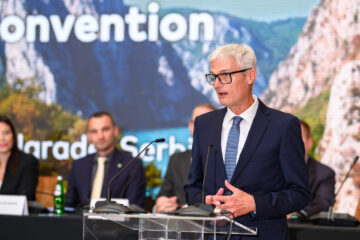
Central Mountains Project at the CCIC Meeting
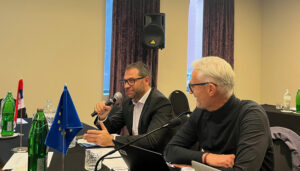
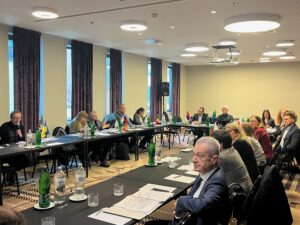
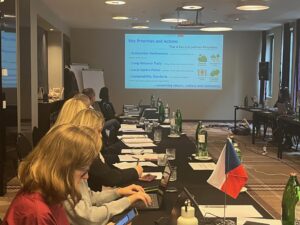
A dedicated session on the Central Mountains project – Central Mountains: From the Alps to the Carpathians – strengthening governance models for sustainable development of mountain areas in Central Europe – was held during the recent CCIC meeting, offering Carpathian Convention stakeholders and policymakers an in-depth look at the project’s progress, solutions, and future direction. While the session focused on the results most relevant to the Carpathians, participants also had the opportunity to explore the full range of project activities and upcoming plans.
The CM project is highly significant for the Carpathian region, as its themes closely reflect the core mission of the Carpathian Convention—strengthening cooperation and governance for sustainable development in Europe’s mountain areas.
The Secretariat of the Carpathian Convention has been actively supporting the project through strategic partnerships with its key collaborators, including the Association of the Carpathian Euroregion, Brașov County, and Eurac Research. These partnerships extend beyond the current project and will now be further strengthened through the application of newly developed instruments and documents that can be taken forward for joint implementation.
Among the showcased results were:
- Joint strategy for community-led sustainable development of mountain areas in Central Europe with a special focus on participatory governance. Its refinement has been consulted at the meeting via interactive session.
- Design and testing of a new cooperation system for the Carpathian Sustainable Tourism Platform.
- Carpathian Sustainable Tourism Platform Solution: Cross-Border Working Teams.
- Action Plan for sustainable tourism development
- CSTP WorkPlan: Designing and Testing a new Carpathian Sustainable Platform Cooperation System
- Alpine – Carpathian Toolbox for Participation in Central European Mountain Areas, which provides practical methods for engaging youth, civil society, and other actors in decision-making. By promoting participatory governance, it supports the objectives of the Carpathian Convention and offers Parties and institutions a resource to embed inclusive approaches into policies and strategies for sustainable regional development. In this respect, the Toolbox can be a useful instrument for advancing cooperation with regional and local stakeholders in the Carpathians.
- Toolbox for identifying, creating and developing Cross-Border Functional Areas in Central Europe (final version to be available soon). Given the importance of cross-border cooperation for the Carpathian Convention, the document suggests innovative solutions that can strengthen governance and advance sustainable development across the Carpathians and other mountain regions.
- Strengthened framework for fostering collaboration among civil society organisations (CSOs) in the Carpathian region. The Carpathian Civil Society Platform shall be considered as an instrument (solution) to enhance social cohesion and promote citizen participation in policy and decision-making processes by networking and mobilising civil society actors at the local, subregional, and transnational levels and contribute to strengthening and broadening cross-border cooperation between CSOs.
The CCIC welcomed the project’s key tools and outputs and recommended their further consideration for supporting the implementation of the Carpathian Convention. The session demonstrated the strong potential of the CM project to enhance cooperation across the region and to contribute meaningfully to the sustainable development of the Carpathians.
 Photos by SCC